Physical AI Explained: How Smart Robots Are Changing the Real World
For years, AI mostly lived inside a screen — answering questions, writing text, generating images.
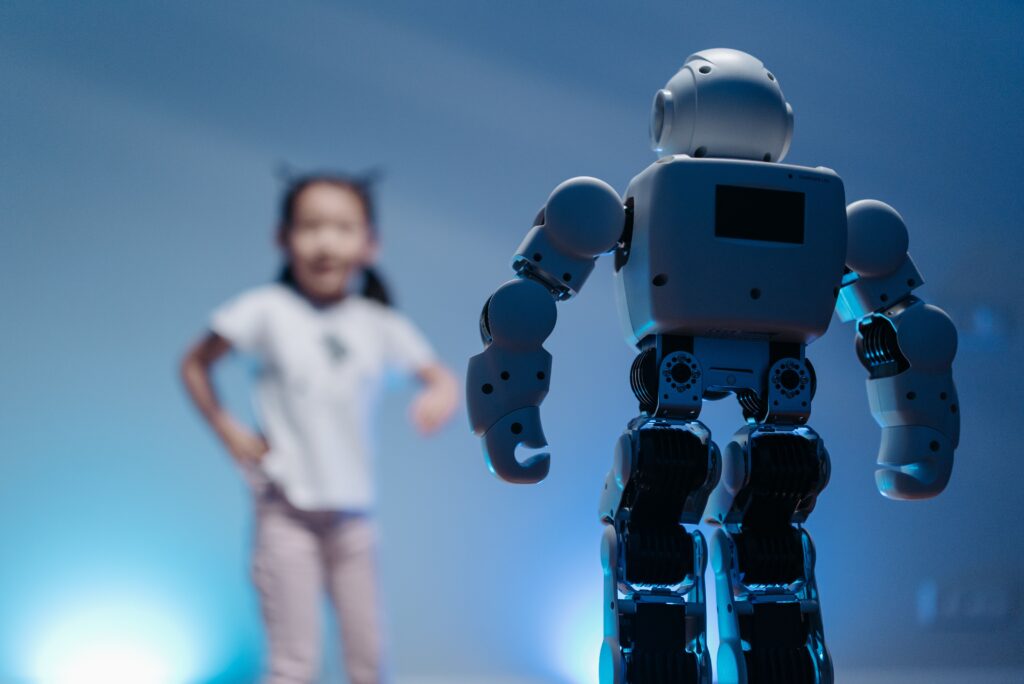
For years, AI mostly lived inside a screen — answering questions, writing text, generating images. Physical AI is what happens when that intelligence gets a body: robots that can see their surroundings, make decisions, and physically act in the real world instead of just processing information.
This matters right now because physical AI has quietly moved from research demos to actual warehouses, factories, and even a few public storefronts. Whether you’re curious about the future of manufacturing, wondering if a robot might show up at your job, or just want to understand what all the humanoid robot headlines are about, this is a good moment to get up to speed.
What Is Physical AI?
Physical AI refers to robots and machines that use artificial intelligence to perceive their environment, reason about it, and move or act autonomously — rather than following a fixed, pre-programmed set of movements.
This is different from two things people often confuse it with:
- Generative AI (like chatbots) that produces text, images, or code but doesn’t interact with the physical world.
- Traditional industrial robots, which repeat the exact same pre-taught motion over and over, with no ability to adapt if something changes.
A physical AI robot, by contrast, uses cameras and sensors to understand what’s actually in front of it right now, and adjusts its actions accordingly.
Key Takeaway: Physical AI is the difference between a robot that repeats a memorized routine and one that can look at a new situation and figure out what to do.
Why Is It Trending in 2026?
Several things have converged to make 2026 a breakout year for this technology:
- Major tech companies are investing heavily. Tesla has reportedly committed around $20 billion in capital expenditure to convert parts of its production lines toward building its Optimus humanoid robot — one of the largest single capital commitments to physical AI by an automotive company.
- Foundation models are being adapted for robotics. Companies like Google DeepMind have integrated general-purpose AI models (such as Gemini Robotics) directly into robot platforms, including Boston Dynamics’ electric Atlas humanoid, moving from research prototypes toward deployed robot fleets at partner facilities.
- Industry events reflect the shift. At Automate 2026, one of the largest robotics trade shows, physical AI dominated the floor — with companies like Kawasaki and Yaskawa showcasing industrial robots designed for real packaging and logistics work, alongside humanoid robots that drew crowds but remain further from production-line readiness.
- Investor interest is surging. Industry watchers, including SoftBank’s CEO, have publicly pointed to physical AI and robotics as a leading candidate for the next major wave of large-scale tech investment.
How Does It Work?
Physical AI generally operates through a loop often described as perceive, predict, and act:
- Perceive: Cameras and sensors gather real-time information about the robot’s surroundings — objects, obstacles, people, lighting conditions.
- Reason and predict: An AI model, often trained partly on “world models” (systems that simulate how physical environments behave), interprets that data and predicts what’s likely to happen next.
- Act: The robot executes a physical action — gripping an object, adjusting its path, or performing a task — based on that reasoning, rather than following a fixed script.
- Learn and adapt: Many systems continue refining their behavior using real-world feedback and simulated (“synthetic”) training data, which lets them prepare for rare situations without needing to encounter every one in real life first.
This real-time feedback loop is what allows physical AI robots to adjust to changing conditions — something traditional pre-programmed robots simply can’t do.
Real-World Examples
Physical AI is showing up across a range of industries in 2026:
- Manufacturing: Vision-based inspection systems can detect product defects on the line in real time, often trained using synthetic data rather than waiting to encounter every possible flaw naturally.
- Warehousing and logistics: Robotic arms and mobile robots handle picking, packing, and palletizing tasks in facilities where product types and layouts vary constantly.
- Automotive manufacturing: Tesla has begun production of its Optimus humanoid at its Fremont facility, while Boston Dynamics has deployed electric Atlas humanoids to partner sites including Hyundai facilities.
- Public-facing pilots: Companies like Unitree Robotics have showcased humanoid robots in consumer-facing settings, including an “embodied intelligence” experience store that opened in Shanghai in mid-2026.
- Component innovation: Specialized manufacturers are now building the smaller pieces that make humanoids practical — including dexterous robotic hands designed for tasks like assembly and sorting, produced at increasing scale.
Benefits and Opportunities
Addressing labor shortages. Manufacturing, warehousing, and logistics have faced persistent labor gaps, and physical AI offers a way to fill repetitive or physically demanding roles.
Faster adaptability. Because these systems respond to real-time sensor data instead of fixed instructions, they can be reconfigured for new tasks much faster than traditional automation — useful for facilities producing many different products in smaller batches.
Improved safety and precision. In hazardous or highly repetitive environments, physical AI can take on tasks that carry higher injury risk for human workers, while also reducing costly errors through consistent precision.
Falling costs. Industry reporting suggests the entry-level price for functional humanoid robots is trending toward the $25,000 range from some major manufacturers — a substantial drop that could widen adoption beyond large enterprises, though this remains an evolving and competitive market.
Challenges and Risks
But what does this actually mean for everyday workers and businesses? It’s worth being realistic about where the technology genuinely stands.
- Humanoids aren’t production-ready everywhere. Despite the attention they draw, most industry coverage from 2026 notes that bipedal humanoid robots remain several development cycles away from widespread deployment on real production lines, even as specialized industrial robots are already shipping and working today.
- High upfront investment. Even with falling humanoid prices, building physical AI systems at scale — sensors, compute, maintenance infrastructure — requires significant capital, as reflected in Tesla’s multibillion-dollar commitment.
- Job displacement concerns. As with earlier waves of automation, there are legitimate concerns about how physical AI will affect roles in manufacturing, warehousing, and logistics, even as it also creates new categories of technical jobs.
- Reliability and safety in unpredictable settings. Real-world environments are messy — physical AI systems can still struggle with genuinely novel situations that weren’t well represented in their training or simulated data.
- Maintenance and repair logistics. As deployment scales, keeping large robot fleets running requires practical solutions — some manufacturers have moved toward modular, swappable components (like quick-change batteries and joints) specifically to reduce downtime.
What Could Happen Next?
A few directions look likely based on current momentum, though the exact pace remains uncertain:
- Industrial robots scale faster than humanoids. Specialized robots built for specific tasks — packaging, palletizing, inspection — are likely to see wider real-world deployment sooner than general-purpose humanoids.
- Continued heavy investment. Given the scale of current spending from companies like Tesla and interest from investors like SoftBank, funding into physical AI is likely to keep growing, though some market forecasts should be treated as speculative given how early this market still is.
- Gradual humanoid adoption. Analysts broadly expect humanoid robots to move from pilots and demos toward selective commercial use over the next several years, rather than a sudden mass rollout.
- More component standardization. Expect continued movement toward interchangeable parts and modular designs, which could make robot fleets easier and cheaper to maintain at scale.
Suggested Comparison: Physical AI vs. Traditional Robots vs. Generative AI
| Technology | Understands Environment? | Adapts in Real Time? | Physically Acts in the World? |
|---|---|---|---|
| Generative AI (chatbots) | No | N/A | No |
| Traditional industrial robots | Limited (pre-programmed) | No | Yes |
| Physical AI | Yes | Yes | Yes |
Final Thoughts
Physical AI is where artificial intelligence stops being purely digital and starts reshaping physical spaces — warehouses, factory floors, and eventually parts of daily life. The momentum behind it in 2026 is real, backed by serious capital investment and genuine deployments, not just concept demos.
That said, the gap between flashy humanoid showcases and robots doing reliable, everyday work is still closing rather than closed. The more grounded story right now is specialized industrial robots quietly proving their value on real production lines, while humanoids continue their slower march toward broader readiness. Either way, this is a technology trend worth watching closely over the next few years.
Suggested Featured Image Idea: A clean, well-lit photo-style illustration of a robotic arm or humanoid robot working alongside a human on a modern factory floor, with subtle sensor/vision overlay graphics to represent real-time perception.
Suggested Graph/Infographic Idea: A simple three-column comparison graphic (matching the table above) contrasting generative AI, traditional robots, and physical AI across environment awareness, adaptability, and physical action.
3 Internal Link Suggestions:
- Anchor Text: “how AI agents are changing the way we work” — Related Topic: An explainer on agentic AI and autonomous digital task execution, as a digital counterpart to physical AI.
- Anchor Text: “top 10 AI trends in 2026 you should know about” — Related Topic: A broader roundup of AI trends, including physical AI as one of several major 2026 developments.
- Anchor Text: “what are world models and how do they train AI” — Related Topic: A deeper explainer on world models and synthetic training data used in robotics and autonomous systems.