The Rise of AI-Powered Robots: What the Future of Robotics Looks Like
For most of robotics history, a robot meant a machine bolted to a factory floor, repeating
For most of robotics history, a robot meant a machine bolted to a factory floor, repeating the exact same motion thousands of times a day. AI-powered robots are breaking that mold — machines that can see their surroundings, understand spoken instructions, and adapt to new situations, whether they’re on a warehouse floor, in a hotel lobby, or now, for the first time, inside actual homes.
This matters because 2026 marks a genuine turning point: walking, general-purpose robots are shipping to consumers for the first time, not just appearing in demo videos. Whether you’re curious about robots doing chores, wondering what’s realistic versus hype, or just want to understand where this industry is actually headed, this is a useful moment to take stock.
What Are AI-Powered Robots?
AI-powered robots are machines that combine physical hardware — sensors, motors, cameras — with artificial intelligence that lets them perceive their environment, understand instructions, and adapt their actions in real time, rather than following a single, rigid, pre-programmed routine.
This spans a wide range of machines, not just humanoid robots:
- Industrial and warehouse robots that handle picking, packing, and inspection with adjustable, AI-driven flexibility.
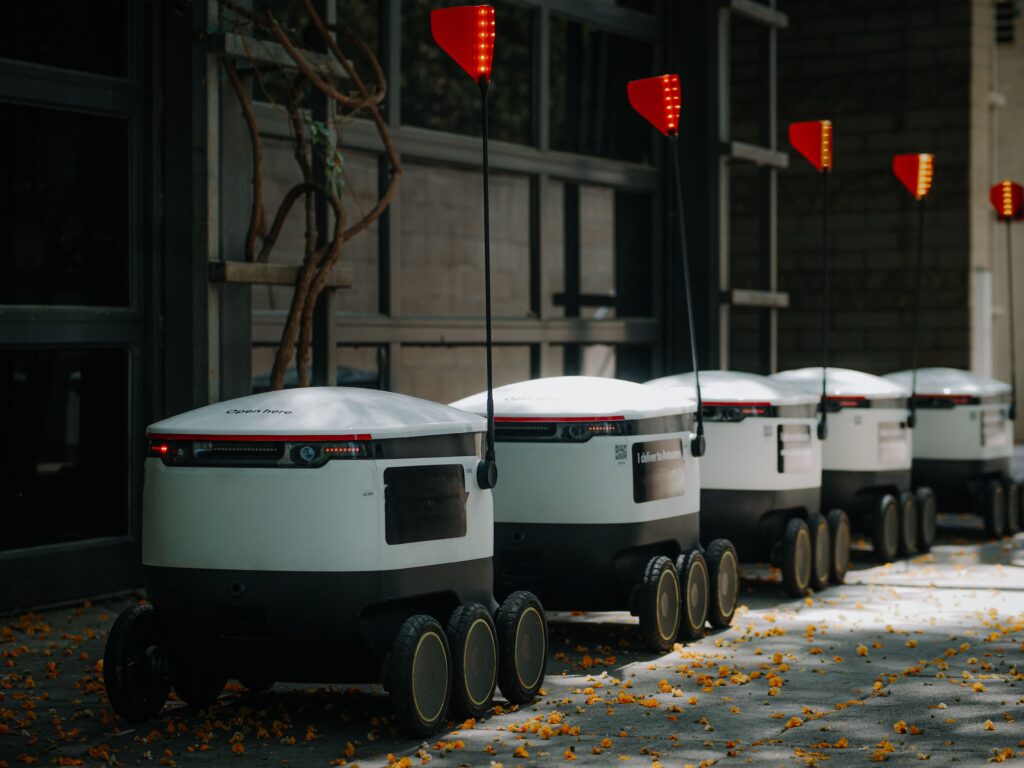
- Service robots that interact directly with customers — greeting guests, delivering food, or answering questions.
- Household robots — from smarter robotic vacuums to newly available walking home assistants — designed to help with everyday domestic tasks.
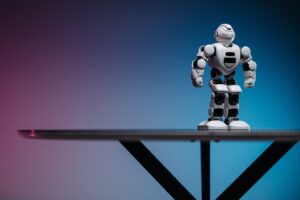
- Humanoid robots, built with a human-like body plan specifically so they can work in spaces designed for people, using tools designed for human hands.
Key Takeaway: The real shift with AI-powered robots isn’t just smarter hardware — it’s robots that can be told what to do in plain language and figure out how, rather than needing every motion custom-programmed.
Why Is It Trending in 2026?
A few developments make 2026 a genuinely notable year for robotics, not just an incremental one:
- Walking robots are shipping to actual homes for the first time. 1X’s NEO humanoid began household deliveries in 2026, priced around $20,000 or available for roughly $499 per month, handling tasks like cleaning, laundry, and basic meal preparation — a milestone widely described as the first real consumer availability of a general-purpose walking robot.
- Major players are racing to follow. Tesla has targeted limited consumer availability for its Optimus robot starting in the summer of 2026, while Germany’s Neura Robotics has a smaller humanoid shipping around the same time.
- The household robotics market is growing fast on its own. The global household service robots market is projected to grow from roughly $20 billion in 2026 to $71.3 billion by 2034, driven partly by an aging global population expected to include over 1.5 billion people aged 65 or older by 2050.
- AI foundation models are making robots more capable. Large language models now let robots accept plain spoken instructions, while multimodal AI lets them process visual, audio, and touch-based information simultaneously — capabilities that didn’t exist in consumer robotics just a couple of years ago.
How Does It Work?
Modern AI-powered robots generally combine a few key technical layers:
- Perception. Cameras, depth sensors, and microphones let the robot build a real-time picture of its surroundings.
- Language understanding. Foundation models allow robots to interpret spoken or typed instructions in natural language, rather than requiring specialized programming for every task.
- Learning from demonstration. Many home robots, including 1X’s NEO, are designed to learn tasks partly through human guidance and teleoperation (a person remotely controlling the robot), gradually increasing autonomy as the system learns.
- Fleet learning. Data collected across many deployed robots can be used to improve the AI models for the entire fleet, meaning robots can improve over time even after they’re already in someone’s home or workplace.
It’s worth being direct about where things currently stand: most home robots today handle a fairly narrow set of tasks reliably — meal preparation, for instance, is often still limited to simple actions like microwaving or pouring, rather than full cooking.
Real-World Examples
AI-powered robots are already active across a range of settings in 2026:
- 1X NEO — a household humanoid now shipping to early customers, focused on everyday chores like tidying and object handling.
- Boston Dynamics’ Electric Atlas — an enterprise-grade humanoid with 2026 deployments already allocated to Hyundai’s Robotics Metaplant Application Center and Google DeepMind, focused on industrial tasks like material handling and order fulfillment.
- Tesla Optimus — positioned as a multipurpose worker for warehouses and manufacturing, with limited consumer availability targeted for mid-2026, though official pricing remains unconfirmed.
- Customer service robots — models like Bear Robotics’ Servi and Pudu’s BellaBot are deployed across restaurants, hotels, and retail spaces for tasks like food delivery and guest greeting, part of a global service robotics market valued at nearly $47 billion in 2023 and projected to reach roughly $108 billion by 2030.
- Household service robots — floor-cleaning robots currently dominate this category, holding over 70% of the household robot market, alongside newer categories like lawn care and elderly assistance robots.
Benefits and Opportunities
Addressing labor and caregiving gaps. As the global population ages, household and assistive robots offer a potential way to support daily tasks and reduce strain on human caregivers facing existing labor shortages.
Consistent, always-available service. In business settings, service robots can offer round-the-clock availability and consistent performance, freeing human staff to focus on more complex guest interactions.
Falling entry costs. Analysts suggest some humanoid robot prices are trending toward the $20,000–$25,000 range, a meaningful drop that could make general-purpose robots realistic for a wider range of businesses and, eventually, households.
Improving capability through real-world data. Because many systems learn continuously from real deployments, today’s relatively narrow task lists are expected to expand as robots accumulate more real-world experience.
Challenges and Risks
But what does this actually mean for someone considering a home robot today? It’s worth tempering expectations with a few honest caveats.
- Capabilities remain genuinely limited. Despite the hype, current home robots handle a narrow set of tasks reliably, and household robotics still accounts for only around 25% of total humanoid deployments — the bulk of real-world use remains industrial and commercial.
- Full autonomy isn’t here yet. Many home trials still rely on remote human oversight or teleoperation behind the scenes, meaning the “fully autonomous” robot experience is still a work in progress rather than the current standard.
- Regulatory frameworks are still forming. The EU AI Act classifies physical-world robots as high-risk systems requiring active risk management and monitoring, while the U.S. currently leans more on existing product liability law and voluntary industry standards — a patchwork that’s likely to tighten over the next few years.
- Safety and incident transparency remain unresolved. Consumer advocates have called for more transparent failure reporting, similar to aviation safety practices, and formal public incident registries in some regions aren’t set to begin until 2027.
- Regional manufacturing concentration. A large share of current robot manufacturing capacity sits in Asia, giving that region a structural cost and supply-chain advantage that Western manufacturers are still working to match.
What Could Happen Next?
A few directions seem likely based on where things currently stand, though the pace remains genuinely uncertain:
- Task lists will expand gradually. Expect home and service robots to take on a wider range of tasks over the next few years as fleet learning and foundation models improve, rather than a sudden leap to full general-purpose capability.
- Industrial and commercial robots will scale faster than home robots. Enterprise deployments already have clearer ROI cases and more established safety practices, making them likely to outpace consumer adoption in the near term.
- Regulation will tighten as incidents accumulate. As more robots operate in homes and public spaces, expect stronger safety reporting requirements and formal incident tracking to follow.
- Pricing will likely continue to fall, following the broader pattern in consumer electronics and manufacturing, though today’s price points should still be considered relatively early and possibly volatile.
Suggested Comparison: Where AI-Powered Robots Stand by Category (2026)
| Category | Real-World Readiness | Example |
|---|---|---|
| Industrial/warehouse robots | Mature, widely deployed | Boston Dynamics Atlas, Kawasaki systems |
| Commercial service robots | Established, growing steadily | Bear Robotics Servi, Pudu BellaBot |
| Household cleaning robots | Mature, dominant market segment | Robotic vacuums and mowers |
| General-purpose home humanoids | Very early, first deliveries in 2026 | 1X NEO, Neura 4NE-1 Mini |
Final Thoughts
AI-powered robots have quietly moved past the “cool demo” phase into genuine, if still limited, real-world deployment — including, for the first time in 2026, actual homes. The most exciting part isn’t that robots have suddenly become universally capable; it’s that the underlying AI — language understanding, real-time perception, learning from experience — has matured enough to make general-purpose robots a realistic near-term product category rather than a distant research goal.
The honest picture right now is a split one: industrial and commercial robots are doing real, valuable work today, while home robots are taking their first genuine steps outside the lab. Both are worth watching closely, because the gap between them is likely to narrow faster than most people expect.
Suggested Featured Image Idea: A warm, approachable photo-style illustration of a household humanoid robot helping with a simple domestic task like folding laundry or tidying a kitchen counter, in a bright, everyday home setting.
Suggested Graph/Infographic Idea: A simple readiness-level chart (matching the table above) showing how mature different robot categories are in 2026, from established industrial robots to early-stage home humanoids.
3 Internal Link Suggestions:
- Anchor Text: “physical AI explained: how smart robots are changing the real world” — Related Topic: A deeper technical explainer on the perceive-predict-act loop that powers modern AI robots.
- Anchor Text: “AI vs humans: which jobs could AI agents transform in 2026” — Related Topic: A related look at how robotics and AI agents together are reshaping specific job categories.
- Anchor Text: “top 10 AI trends in 2026 you should know about” — Related Topic: A broader roundup situating AI-powered robotics among other major 2026 technology trends.