AI Coding Tools in 2026: Will Developers Still Need to Write Code?
Not long ago, AI coding assistants were a novelty — a helpful autocomplete, maybe a decent suggestion here and there.
Not long ago, AI coding assistants were a novelty — a helpful autocomplete, maybe a decent suggestion here and there. In 2026, that’s changed dramatically. AI coding tools are now writing, reviewing, and even shipping meaningful portions of production code, and the tools doing it have become genuinely central to how software gets built.
This matters whether you’re a developer, a manager deciding what tools to buy, or just someone curious whether “coding” as a skill is changing shape. The honest answer sits somewhere between the two extremes you’ve probably heard — “AI replaces programmers” and “it’s just autocomplete.” Here’s what’s actually happening.
What Are AI Coding Tools?
AI coding tools are software assistants — often built into code editors or command-line interfaces — that use large language models to write, explain, debug, and refactor code based on natural language instructions or existing codebase context.
They range from simple autocomplete-style suggestions to full “agentic” tools that can plan a multi-step coding task, write and test code, and make changes across an entire codebase with limited human intervention — closer to a collaborator than a suggestion box.
Key Takeaway: The shift in 2026 isn’t just that AI writes more code — it’s that these tools increasingly reason about entire codebases and multi-step tasks, not just single lines.
Why Is It Trending in 2026?
The scale of adoption has moved from notable to nearly universal among professional developers:
- Daily use has become the norm. According to JetBrains’ 2026 developer research, roughly 84–90% of developers now use AI coding tools regularly, with a majority using them daily.
- AI-assisted code makes up a real share of what’s shipped. The Stanford AI Index 2026 reportedly found that 51% of code committed on GitHub is now generated or substantially assisted by AI — a striking shift from a few years ago when AI coding tools were still considered experimental.
- The market itself has grown rapidly. The AI coding tools market reportedly grew from around $5.1 billion in 2024 to roughly $12.8 billion in 2026, reflecting both wider adoption and heavier usage per developer.
- Competition has intensified sharply. What was once a GitHub Copilot-dominated space now includes serious competitors: Cursor, an AI-first code editor, reportedly surpassed $2 billion in annualized recurring revenue by early 2026, while Anthropic’s Claude Code grew from a standing start in mid-2025 to meaningful adoption within about eight months.
How Does It Work?
Modern AI coding tools generally operate at a few different levels of capability:
- Autocomplete and inline suggestions. The earliest and simplest form — suggesting the next few lines of code as a developer types, based on context.
- Chat-based assistance. Developers can ask questions, request explanations, or describe a bug in plain language and get code-level answers.
- Agentic coding. More advanced tools can take a broader instruction — “add authentication to this app” — break it into steps, write the necessary code across multiple files, run tests, and report back, closer to delegating a task than requesting a suggestion.
- Codebase-wide context. Newer tools increasingly work with an understanding of an entire project rather than just the file currently open, letting them make more consistent, context-aware changes across a codebase.
Real-World Examples
The current AI coding tool landscape includes a few clear players, each with a different approach:
- GitHub Copilot remains the most widely adopted tool overall, particularly in large enterprises — reportedly used by roughly 90% of Fortune 100 companies in some form, and holding around 29% direct workplace adoption among developers in 2026 survey data.
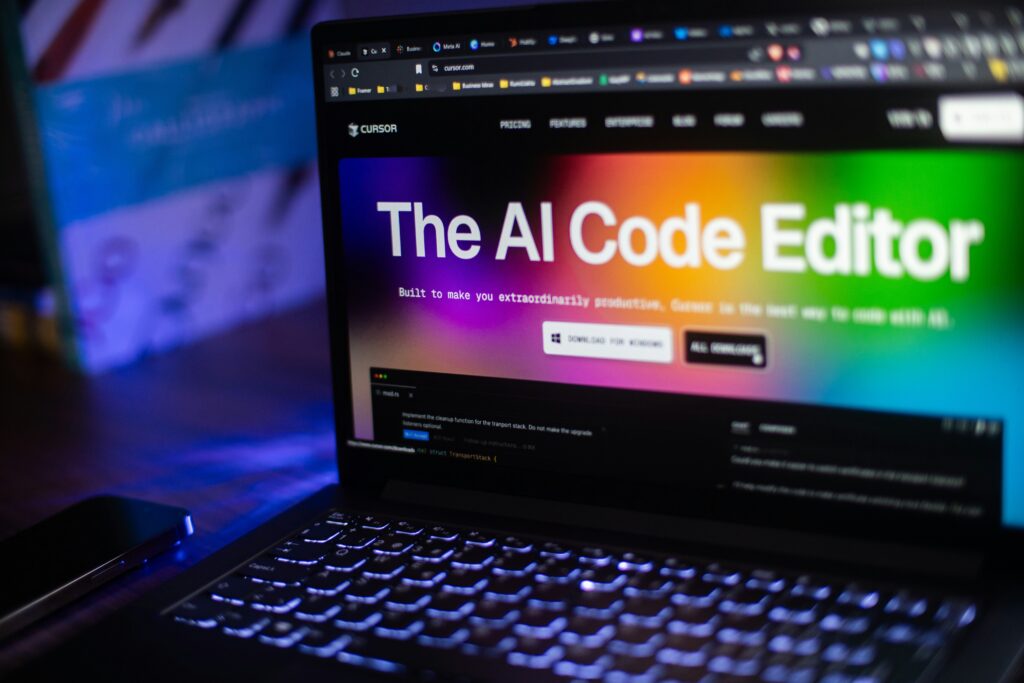
- Cursor, an AI-native code editor, has become a favorite among power users who want more advanced, agent-driven coding capabilities, with adoption and revenue growing quickly through 2026.
- Claude Code, Anthropic’s command-line and IDE-integrated coding tool, saw particularly fast adoption growth in 2026, reportedly reaching around 18% workplace adoption in JetBrains’ global survey (24% in the US and Canada) alongside notably high developer satisfaction scores in the same research.
- Enterprise integration is deep. Multiple large software and cloud companies have integrated AI coding assistance directly into their development platforms, treating it as standard infrastructure rather than an optional add-on.
Benefits and Opportunities
Real productivity gains. Developers using AI coding tools report completing certain tasks significantly faster, particularly repetitive work like boilerplate code, test writing, and documentation.
Lower barrier to building. Solo developers and small teams can now build and ship complete applications considerably faster than before, since AI tools can handle much of the routine implementation work.
Faster onboarding and learning. AI assistants can explain unfamiliar code, suggest fixes, and act as an on-demand reference, which can help newer developers ramp up more quickly on unfamiliar codebases.
Freed capacity for design and architecture work. As AI handles more routine implementation, some developers report shifting more of their time toward higher-level design decisions, code review, and system architecture.
Challenges and Risks
But what does this actually mean for developers’ day-to-day trust in these tools? The data here is genuinely mixed, and worth taking seriously.
- Trust hasn’t kept pace with adoption. Despite widespread usage, one 2026 industry survey found that only about 29% of developers trust AI-generated output, down from 40% in 2024 — suggesting familiarity hasn’t necessarily translated into confidence.
- Code quality concerns are measurable. Research analyzing over 200 million lines of code found that “code churn” — code revised within two weeks of being written — nearly doubled between 2020 and 2024, a trend researchers have linked to increased AI-assisted coding.
- Human oversight remains essential. Industry analysis is fairly consistent on this point: AI coding tools can accelerate specific tasks, but experienced engineers are still needed to validate output, understand system-level trade-offs, and take responsibility for what actually ships to production.
- The “vibe coding” debate is real. A growing divide has emerged in developer communities between those embracing fast, AI-driven “vibe coding” and those emphasizing careful, traditional engineering discipline — with legitimate concerns on both sides about speed versus reliability.
- Market volatility is already visible. The competitive landscape has shifted quickly enough that some providers have had to adjust plans rapidly — for example, one major provider reportedly paused new sign-ups for certain subscription tiers in April 2026 amid rising demand and competition.
What Could Happen Next?
Looking ahead, a few directions seem likely based on current trends, though the pace and specifics remain uncertain:
- AI-assisted code share will likely keep growing beyond the current roughly 51% of GitHub commits, though the rate of increase may slow as the technology matures.
- The tool landscape will likely keep consolidating around a few leaders, even as the market grows overall — Copilot, Cursor, and Claude Code currently anchor much of the competitive conversation, though newer entrants continue to appear.
- Trust and quality assurance practices will need to catch up. Given the gap between adoption and trust, expect growing emphasis on code review practices, testing discipline, and governance specifically built around AI-generated code.
- The developer role will likely keep shifting rather than disappearing — toward more oversight, architecture, and judgment-heavy work, and less repetitive implementation, consistent with patterns seen in other AI-affected professions.
Suggested Graph: AI Coding Tool Adoption Snapshot (2026)
| Metric | Reported Figure |
|---|---|
| Developers using AI coding tools regularly | ~84–90% |
| GitHub code generated or AI-assisted | ~51% |
| AI coding tools market size (2026) | ~$12.8 billion |
| Developers who trust AI-generated output | ~29% (down from 40% in 2024) |
Figures compiled from 2026 industry research (JetBrains AI Pulse, Stack Overflow Developer Survey, Stanford AI Index, and related industry reports); adoption and trust figures vary by survey methodology and developer segment.
Final Thoughts
So, will developers still need to write code? Based on where things stand in 2026, the honest answer is: yes, but differently. AI coding tools have moved from novelty to daily infrastructure for most professional developers, handling a genuinely large share of routine implementation work. But the data on trust, code churn, and the continued need for human oversight makes clear that experienced judgment hasn’t become optional — it’s arguably become more important, not less.
The most realistic picture isn’t developers being replaced — it’s developers increasingly working alongside AI tools that handle more of the typing, while humans focus more on deciding what should be built, whether it’s built well, and whether it’s safe to ship.
Suggested Featured Image Idea: A clean, modern illustration of a developer at a laptop with a code editor open, subtle AI-assistant chat panel visible alongside the code, conveying collaboration rather than automation replacing the person.
Suggested Graph/Infographic Idea: A simple bar chart comparing AI coding tool adoption rate versus developer trust in AI-generated output, based on the table above, to visually highlight the adoption-trust gap.
3 Internal Link Suggestions:
- Anchor Text: “AI vs humans: which jobs could AI agents transform in 2026” — Related Topic: A broader look at how AI is reshaping specific professional roles, including software development.
- Anchor Text: “how AI agents are changing the way we work” — Related Topic: A foundational explainer on agentic AI, relevant background for understanding agentic coding tools.
- Anchor Text: “AI-powered cybersecurity: how AI is fighting new threats” — Related Topic: A related piece on the security implications of AI-assisted code, including risks tied to unreviewed AI-generated code in production.